Author: Site Editor Publish Time: 2026-01-22 Origin: Site
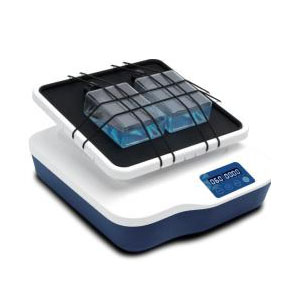
Laboratory shaker is a device used for cell culture, fermentation, microbial cultivation, and mixing or agitating solutions in chemical reactions. Its core function is to provide samples with a uniform and stable mixing environment through controlled oscillation or shaking, thereby facilitating the smooth progress of processes such as cell growth, chemical reactions, or substance dissolution.
From a technical principle perspective, laboratory shaker typically uses a motor to drive the shaking platform in reciprocating or orbital motion. By adjusting parameters such as rotation speed, amplitude, and time, it can simulate mixing requirements under different conditions. For example, in cell culture, low-speed and small-amplitude shaking helps promote the adherent growth of cells, while high-speed and large-amplitude shaking is suitable for achieving uniform distribution of suspension cells.
In terms of application scenarios, laboratory shakers are widely used in many fields such as biology, medicine, chemistry, and food. In biological laboratories, they are often used for cell culture, bacterial culture, and enzyme reaction studies. In the pharmaceutical field, they are used for drug screening and pharmacodynamic research. In the chemical industry, shakers are used for catalyst evaluation and reaction kinetics studies.
Types of Laboratory Shakers
1. Classification by Motion Type
Ⅰ Orbital Shaker
• Features: The platform moves in a circular orbit, creating a gentle vortex mixing effect.
• Applications: Commonly used for suspension cell culture, microbial fermentation, or samples requiring gentle mixing.
• Advantages: Uniform mixing with minimal cell damage.
• Features: Gentle mixing through low‑angle tilting motion (front‑to‑back or side‑to‑side). The movement is smooth without violent oscillation, effectively preventing sample splashing. It is suitable for experiments requiring uniform but low‑intensity mixing.
• Applications: Gel staining and destaining, hybridization assays, membrane processing (e.g., Western blot), gentle mixing of cell culture flasks, and various sample preparation procedures that need low‑strength mixing.
• Reference models: SK-R330-Pro, SK-R1807-S
Ⅳ Three‑Dimensional (3D) Shaker
• Features: Combines horizontal and vertical movements for complex, multi‑directional mixing.
• Applications: High‑throughput screening, DNA hybridization, and other processes requiring efficient mixing.
• Advantages: High mixing efficiency and reduced risk of sample splashing.
• Reference models: SK-D3309-Pro, SK-D1810-S
!!!NADE is proud to introduce our new intelligent remote‑control shaking incubator. The controller can be placed outside the incubator for convenient operation. Contact our sales team for more information.
2. Classification by Functional Extension
Incubator Shaker
• Integrates heating or cooling modules, capable of controlling temperature while oscillating (e.g., 5°C–100°C).
• Applications: Microbial culture, enzyme reactions, PCR pretreatment, etc.
• Reference models: TSK-70, TSK-70C
Microplate Shaker
• Integrates a dedicated oscillation platform adapted for microplates, with precise control of oscillation frequency and amplitude, suitable for 96-well/384-well microplates, and some can be linked with temperature control.
We also offer large‑capacity constant‑temperature shaking incubators. Contact our sales team for more information.
How to select
When selecting a shaking incubator, it is recommended to focus on the following key parameters:
• Maximum Load Capacity:Choose a load capacity that matches your actual experimental needs to ensure stable operation even under full load.
• Amplitude:Different experiments require different amplitudes. Select based on your culture volume and mixing requirements.
• Shaking Mode: Common modes include reciprocating and orbital shaking, each suitable for different types of experiments and containers.
• Compatible Clamps and Accessories: Such as anti‑slip trays, fixing strings, beaker clamps, and spring clamps. These ensure secure fixation of various common containers, enhancing experimental safety and stability.
• Motor Type:A DC brushless motor is preferred. It offers low friction, low noise, a long service life, and high durability, helping to reduce maintenance costs and ensure long‑term stable operation.
Or simply contact us, and we’ll recommend the right model for your needs.